
“Call us if you need us”
Caroline had heard the words before.
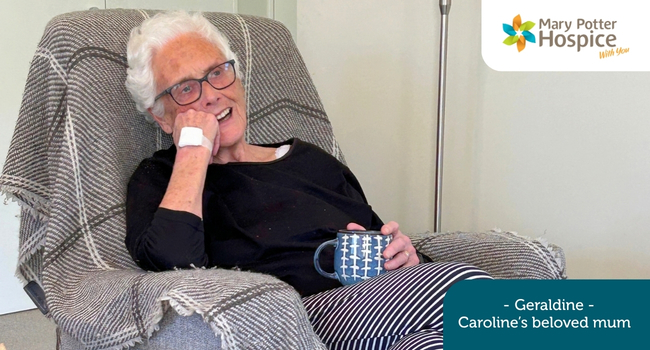
Her mum, Geraldine, was dying, and Caroline had spent a long time making sure she got the care she needed.
“I had to advocate for her all the time to get her needs met.”
So, when Geraldine’s care was transferred to Mary Potter Hospice, and Caroline was told, “Call us if you need us,” she remembers thinking, “They don’t really mean that.”
Then, at two o’clock one morning, Caroline needed help.
Geraldine was at home, and Caroline was nervous about giving her medication.
“I honestly did not think that I would be FaceTiming someone at two o’clock in the morning to help me learn how to draw up some medication.”
But when Caroline called, a Mary Potter Hospice nurse answered.
“It’s okay, we’ve got this, we can go really slow. Ring me 10 times if you need to.”
Even when it meant showing the nurse the bowl her mum had been sick into over FaceTime, Caroline remembers, “You know, like they were just fine.”.
“They genuinely meant it.”
Can you imagine what it meant for Caroline to discover that she no longer had to advocate constantly for the care her mum needed?
As Geraldine became more unwell, there were new and sometimes frightening things for Caroline and her family to navigate. And yet, when they needed help, there was someone there who understood what was happening and could help them through it.
Your generosity is part of what makes this possible.
This is part of the promise we make to people in our care and their whānau: when you need us, we will be there.
And we can keep that promise only because people like you choose to stand alongside us.
Your generosity helps make it possible for our nurses to answer that call at two o’clock in the morning, and to give a daughter like Caroline the time, specialist expertise and reassurance she needs.
Care that stepped up
When Geraldine first came into the care of Mary Potter Hospice, a nurse and doctor visited her at home. Caroline remembers the “delightful pair” arriving with what she calls their “magic box of tricks”, along with all the numbers the family could call.
“I really wasn’t expecting all that to work.”
But it did.
“As it got more and more intense, the care stepped up. And it just stepped naturally and easily.
“Every time I made a phone call, they would respond and something would happen, and then some lovely smiling person would turn up.”
This is the care we want for every person and whānau in the last months, weeks and days of life: specialist care that responds as things change, and the reassurance of knowing you are not doing this alone.
Eventually, Geraldine needed to move into the Inpatient Unit. She hadn’t slept properly for a long time and, when she arrived, she slept for 24 hours.
Caroline wondered if this was it, and whether her mum would wake again.
But the next morning Geraldine woke and said, “I feel great. This is the best I’ve felt in so long.”
Caroline had recently completed her master’s degree and had an important event in Whanganui. Geraldine had been with her throughout it all, “100% invested”.
Caroline had already decided she wouldn’t go, but Geraldine had other ideas.
“Just go, go. You go, you’ve got to do this.”
And Caroline could.
“I felt so comfortable because of the support and the beautiful people.”
This says something important about hospice care. Yes, it is about relieving pain and managing symptoms. But it is also about seeing the whole human being, what matters to them, who matters to them, and how they want to spend the time they have.
Space for precious moments
For around 10 days, the Inpatient Unit became part of the life of Geraldine’s family.
Caroline and her brothers took turns staying with their mum. A bed was brought into Geraldine’s room for Caroline, made up with “this beautiful quilt” someone had donated. Her younger brother made people laugh and the nurses teased him back. Jon, who served the food, learnt everybody’s names.
And one day, a Samoan youth choir came to Hospice. By then, Geraldine rarely wanted to get out of bed. But when she heard them singing outside her room:
“Mum was like, ‘Get me out there!’”
Her family helped her into a wheelchair.
“They just kind of surrounded her and they sung, and it was just beautiful.”
It was the last time Geraldine got up.
These are precious moments. Alongside the medicines, symptom management and practical care, there can still be connection, laughter, music and the things that give a person meaning.
There can still be life.
That is something profound that your generosity helps make possible.
When Caroline was asked what part of her family’s experience she most wanted other families to have, she didn’t hesitate:
“Just that access, that 24-hour access.”
“There were always somebody around at like three o’clock in the morning when something happened.”
Your gift will help Mary Potter Hospice be there for another family caring for someone they love, at home, in the Inpatient Unit, and in those middle-of-the-night moments when they need someone who knows what to do.
Caroline remembers being told, “Call us if you need us.”
At first, she didn’t believe it. But when she realised, “They meant it.”
With your support, we can continue to mean it.
Thank you for being part of this community of care, and for all you make possible for people and whānau at this profound time in their lives.
Help us be there when someone calls
Will you donate today to help more people and families receive compassionate hospice care when they need it most?
A gift of your choosing will help ensure more people and whānau have someone to walk alongside them when they need it most.